Documented history
Twenty Miles Offshore
A small boat demanded a large body of knowledge.
Read Twenty Miles OffshoreThe Water · Black maritime labor
Handmade boats, dangerous runs, and family enterprise fed Charleston before industrial systems pushed the fleet aside.
Overview
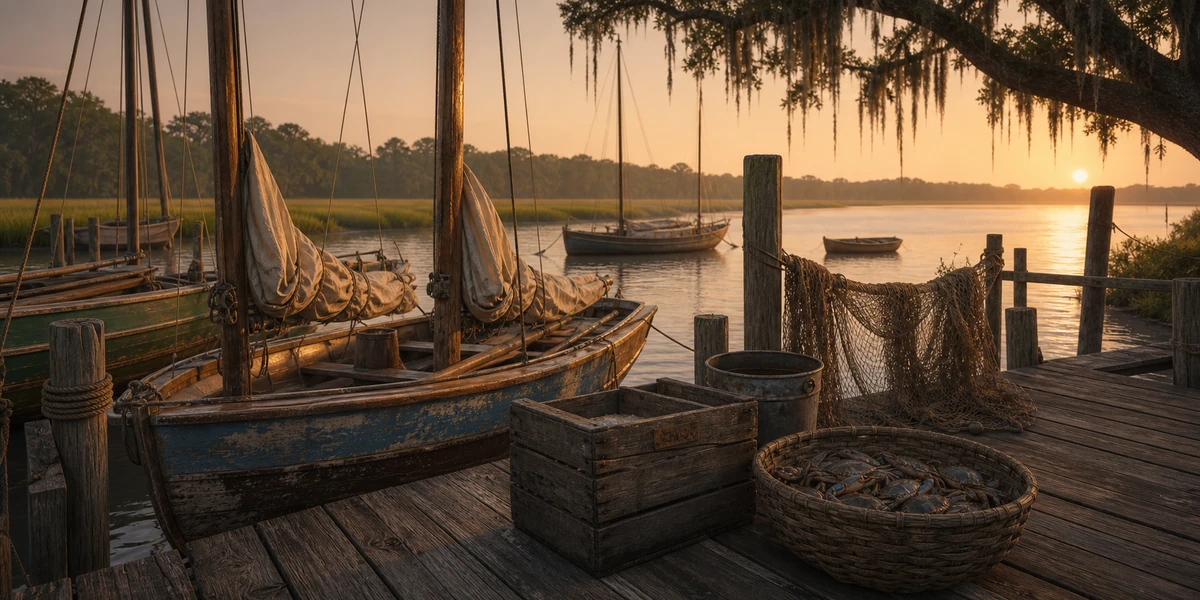
Charleston’s Mosquito Fleet was worked by Black fishermen using small handmade boats and sails, nets, and long lines. Crews traveled as far as roughly twenty miles offshore and brought fresh catch to Fisherman’s Wharf. Skill joined boatbuilding, navigation, weather reading, fishing, song, and sales.
The fleet continued after emancipation through multigenerational labor, but hurricanes and refrigerated commercial vessels helped drive its decline. That ending is not proof that the fishermen lacked modernity. It shows how capital-intensive technology, infrastructure, and disaster can reorganize a market around those with different access to equipment and protection.
Three close readings
Documented history
A small boat demanded a large body of knowledge.
Read Twenty Miles OffshoreDocumented history
The voyage ended in a marketplace alive with family labor and song.
Read Fisherman’s Wharf MarketDocumented history
Refrigeration altered who could reach Charleston’s market.
Read When the Cold Chain Changed the CatchResearch notes
These sources inform the archive’s account; citation does not imply an institution’s endorsement of FishyGrits.