Documented history
Whiting: From Water to Table
A modest fish reveals a chain of local knowledge.
Read Whiting: From Water to TableThe Porch · Foodways
The catch, the pot, and the people around them carry histories of skill, adaptation, and mutual care.
Overview
Gullah Geechee foodways grew from precise knowledge of coastal environments and from African-descended techniques sustained under and after slavery. Fish, crab, garden produce, livestock, rice, okra, peas, peppers, benne, corn, and sweet potatoes belong to a working system of cultivation, harvesting, preservation, and exchange—not a decorative menu.
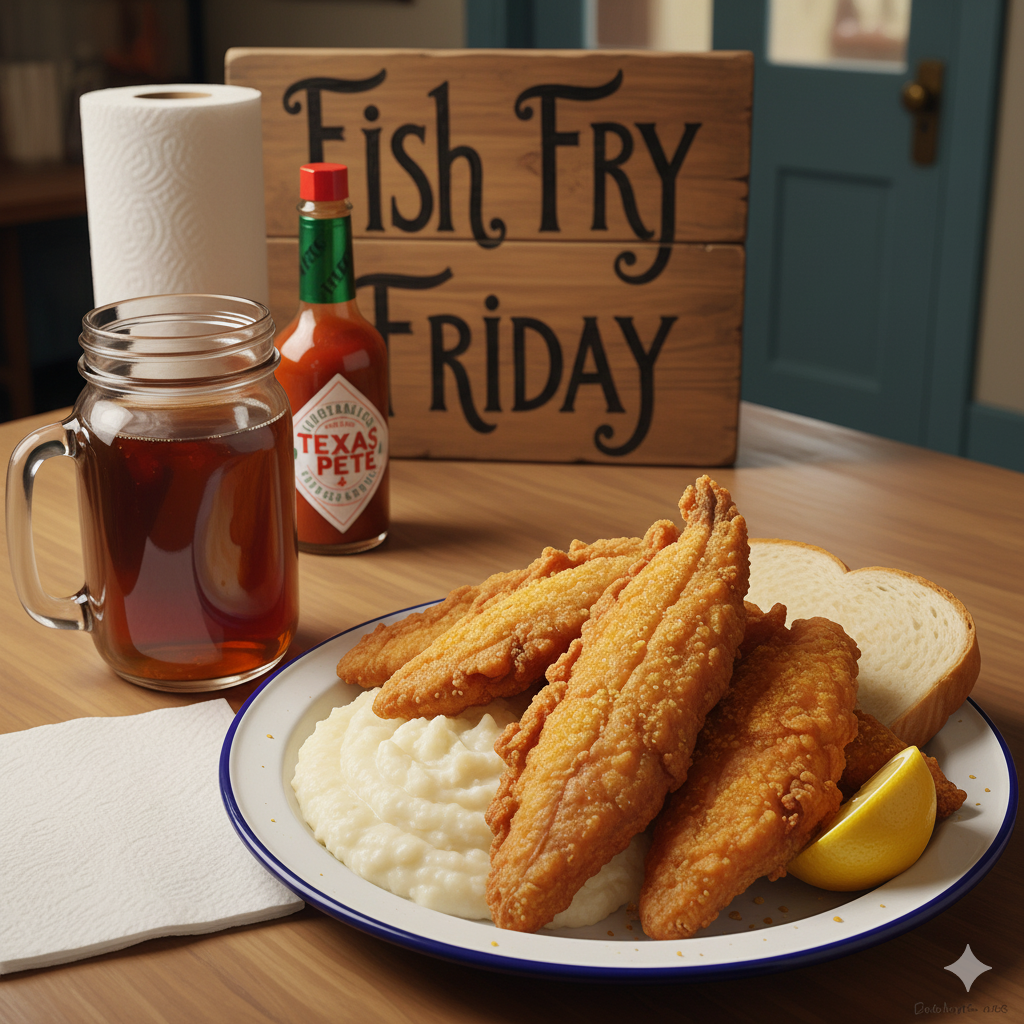
A fish fry can raise money, feed a congregation, mark a reunion, or simply make room for company. FishyGrits reads fellowship as infrastructure: many hands clean the catch, mind hot oil, carry plates, and make sure elders and children eat. Recipes and names vary, so these entries trace documented ingredients and practices without claiming one definitive Lowcountry plate.
Three close readings
Documented history
A modest fish reveals a chain of local knowledge.
Read Whiting: From Water to TableDocumented history
Red rice, perlow, and Hoppin’ John hold more than one history.
Read The Rice Pot RemembersEditorial interpretation
A communal meal is also a method of care.
Read Fellowship Is InfrastructureResearch notes
These sources inform the archive’s account; citation does not imply an institution’s endorsement of FishyGrits.